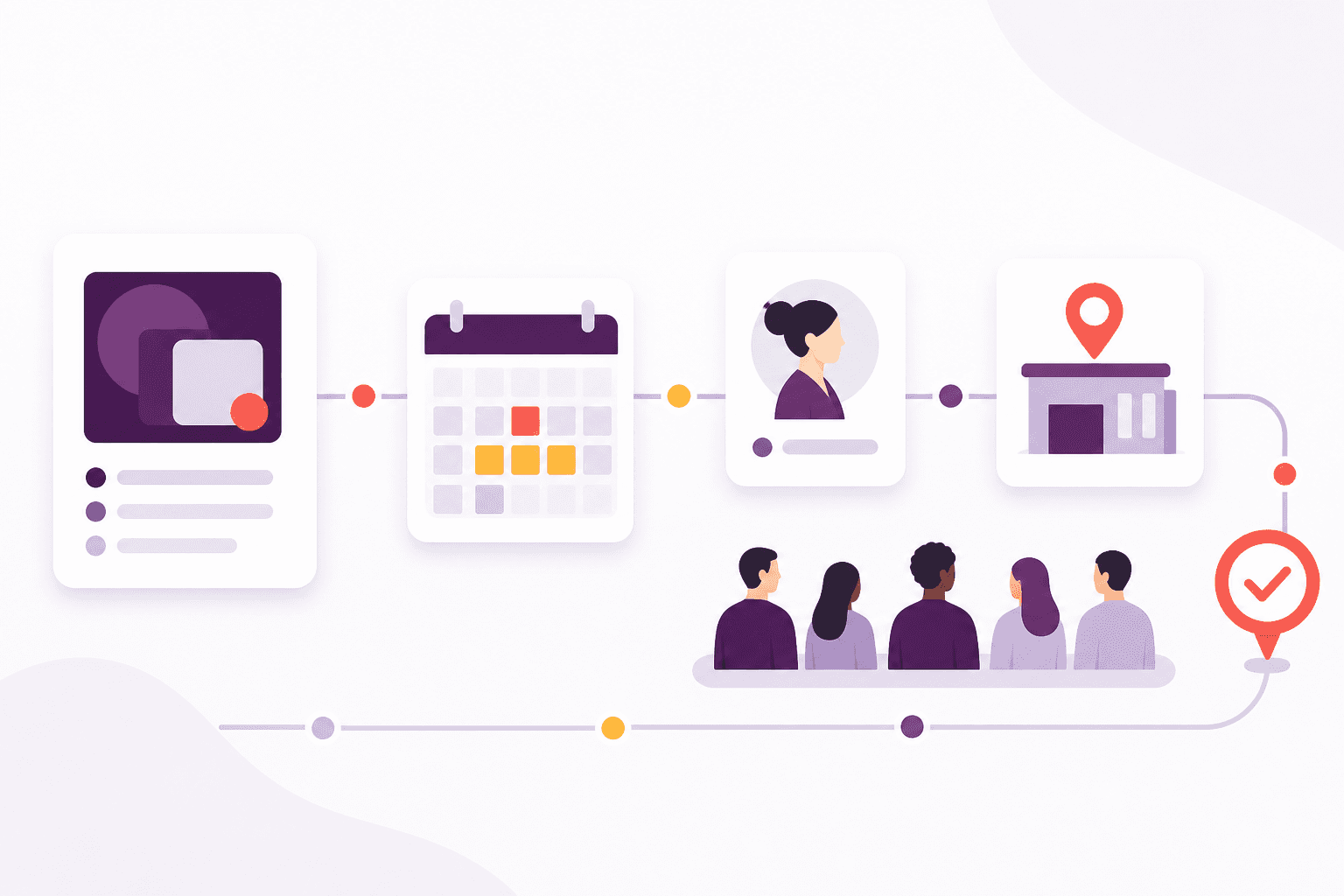
Feature spotlight: one learner record for the whole journey is an operational question before it is a technology question. Training teams need dependable information, clear ownership and enough time to act. When the process is split across spreadsheets, calendars, inboxes and shared drives, staff spend valuable time reconstructing the same position and checking whether somebody else has already dealt with it.
This article examines learner management system, learner records, training provider CRM in the context of day-to-day training administration. It focuses on practical controls, measurable time savings and a realistic move from manual work to connected records. The aim is not to automate every decision. It is to make routine work consistent and ensure the exceptions needing judgement become visible early.
Where the manual process becomes expensive
When the same learner appears in a CRM list, booking sheet, assessment file and qualification tracker, each copy can tell a slightly different story. A changed email address reaches one file but not another. A support conversation is visible to one colleague while the delivery team sees only a name on a register. Service slows because the team must reconstruct the person before acting.
Manual effort around learner management system rarely appears as one large problem. It arrives as repeated questions, copied values, version checks and avoidable corrections throughout feature spotlight: one learner record for the whole journey. Because the work is fragmented, managers may see a busy team without seeing the process that creates the load. Measure the small steps together and include the disruption caused when staff must pause one task to reconstruct another person's record.
What a connected system changes
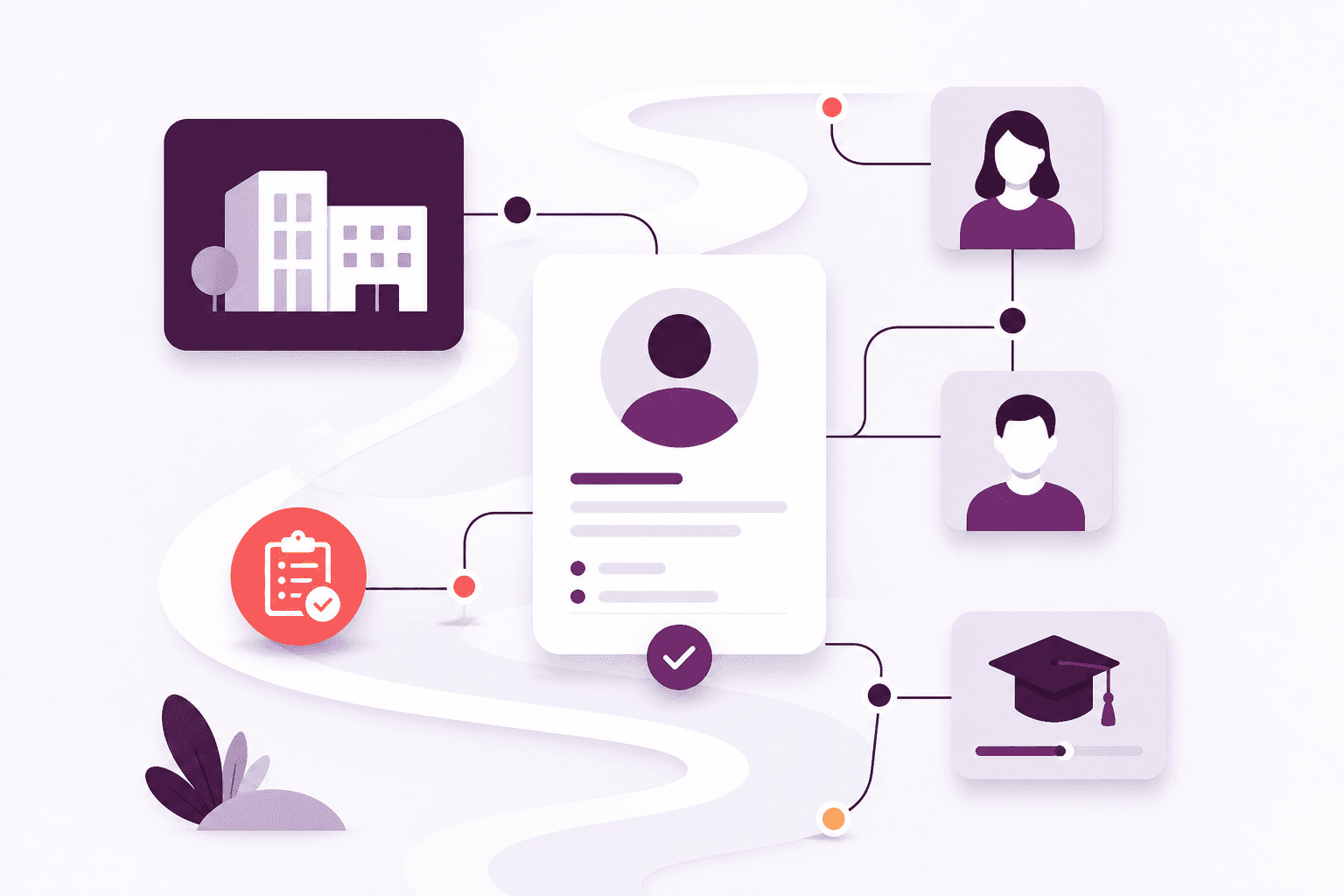
A single learner record does not mean putting every detail on one long screen. It means giving each part of the platform a stable person identifier and dependable relationships. Contact details, employer links, course participation, assessment outcomes, documents, qualifications and reminders can remain organised while still belonging to the same learner journey.
The practical advantage of connected learner management system is context. A status becomes useful when it links to training provider crm, the event that changed it and the action expected next. Permissions should expose that context to the right colleagues while protecting personal information. When the same source record supports screens, reminders and reports, a correction is made once and appears wherever it is relevant.
Follow the work from beginning to end
Test the record by handling a realistic enquiry. An employer asks whether a learner attended, passed and received evidence. The administrator should be able to move through the connected information without searching shared drives or asking several teams. Permissions should still limit sensitive information to people who need it.
An end-to-end test should follow learner records until it produces or updates training provider crm. Include missing data, a correction and an exception that requires human approval. Observe the learner or employer experience as well as the administrator's steps. The result is successful only when the whole journey is clearer, not when one screen is faster but downstream reconciliation remains.
Calculate time saved without exaggeration
Time is saved whenever a question can be answered from the record rather than through investigation. Count internal messages asking for an update, minutes spent matching duplicate identities and corrections caused by outdated contact details. These small interruptions create a substantial operational cost at scale.
Measure learner management system at transaction level before projecting an annual benefit. Time the searches, checks and corrections associated with training provider crm, and multiply only by verified volumes. Use a range instead of a single optimistic number. After implementation, compare the same activities and explain where released time went, whether into additional delivery, quicker responses, stronger evidence or less dependence on overtime.
Keep reminders and automation accountable
In feature spotlight: one learner record for the whole journey, automation is accountable when a user can explain why an action occurred. Tie each trigger to learner records, show what was sent or changed and route failures to a named owner. The system should stop when the objective is complete and respect communication preferences or permissions. Volume alone is not proof of success; relevant action and resolved exceptions are better measures.
Choose an initial automation where learner records is reliable and the consequence of an error is easy to reverse. Track missing training provider crm, failed delivery and manual overrides during the pilot. Staff should know how to pause the process and where exceptions appear. Expand only when the team understands the rule and trusts the queue it produces.
Implement the change in controlled stages
Define matching rules before importing learners. Email can help but should not be the only identifier, especially where shared addresses are common. Agree how names, dates of birth, enrolment numbers and employer relationships will be checked, and give staff a controlled way to resolve possible duplicates.
Turn the agreed learner management system process into a short operating guide that names the authoritative training provider crm record and the person responsible at each stage. Rehearse normal work, corrections and absence cover. Keep early support close to the team and resolve recurring confusion quickly. Do not broaden the rollout while users still need a shadow spreadsheet to feel safe.
Measures that show whether it is working
Useful measures include duplicate rate, incomplete contact details, time to answer employer queries, bounced communications and records with unlinked evidence. The objective is a learner history staff can trust, not simply a larger database.
For feature spotlight: one learner record for the whole journey, pair an efficiency measure with a quality measure and an outcome measure. learner management system may reduce administration time, but the review should also check missing evidence, overdue work or recipient response. Discuss exceptions rather than presenting a detached monthly total. This turns reporting into a way to improve the process and protects against shifting effort to another team.
A practical review checklist
- Name the record or decision that starts the workflow
- Identify the authoritative source for every important field
- Give routine work and exceptions a visible owner
- Retire the spreadsheet, inbox rule or personal reminder being replaced
- Review measures after adoption and improve the process
Use the checklist with a small sample of current work. Note every time somebody leaves the main record, retypes known information or relies on a personal reminder. Those observations create a prioritised improvement list grounded in evidence. They also give the team a baseline for judging whether feature spotlight: one learner record for the whole journey has produced a durable change.
The outcome to aim for
A successful learner management system process makes training provider crm dependable enough that the team can stop maintaining parallel notes. Staff should see relationships, recent activity and next responsibility from the live record. Learners and employers receive more consistent service because a change or absence does not erase context. Stronger reporting follows from the same completeness rather than from extra reconciliation.
Treat learner management system, learner records, training provider CRM as connected parts of that operating model. Start with a clear problem, improve the underlying data, introduce the smallest complete workflow and measure what changes. Technology creates leverage, but the lasting benefit comes from shared definitions, visible ownership and a team that trusts the record enough to stop maintaining parallel manual processes.