
What is a training management system?
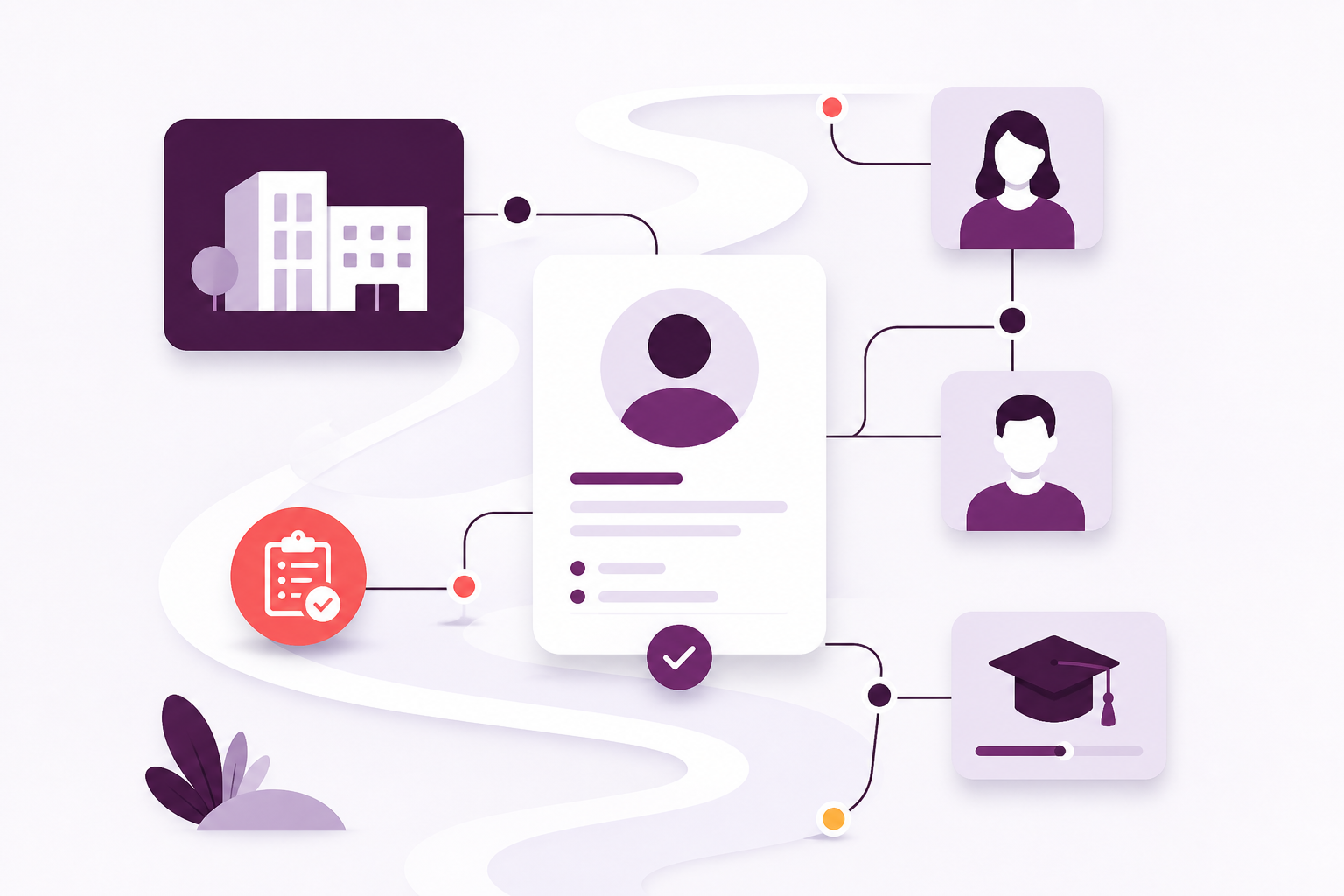
A training management system, often shortened to TMS, is software for organising the operational work behind training. It gives a training provider or internal training team one place to manage learners, organisations, courses, sessions, trainers, venues, attendance, assessments, qualifications, communications and reports. The aim is not simply to store a list of courses. It is to connect the people, dates, records and actions required to move training from an enquiry or requirement through to a completed and evidenced outcome.
Training management software is most useful where delivery involves repeated coordination. A learner may belong to an employer, attend one of several scheduled sessions, need a particular trainer or room, complete an assessment and receive a qualification with an expiry date. When those facts live in separate spreadsheets, calendars and inboxes, administrators repeatedly rebuild the same picture. A TMS turns that picture into a shared workflow.
What does training management software manage?
The exact scope varies between products, but a complete training management system should support the records and decisions that surround delivery. That normally begins with a dependable learner and organisation record. Course catalogues define what can be delivered, while course plans and sessions hold dates, capacity, trainers, rooms and other resources. Attendance, assessment results and evidence then record what happened.
The system should also support what happens after the course. Qualification records, certificate details and renewal rules make future compliance work visible. Communications and reminders help the team contact learners or employers at the right time. Reporting should use those same live records, rather than asking an administrator to export several files and reconcile them before every meeting.
- Learner, contact and employer records
- Course catalogues, plans, sessions and capacity
- Trainer, venue and room scheduling
- Attendance, assessment, evidence and certificates
- Qualification expiry tracking and renewal actions
- Email, SMS and other learner communications
- Operational, training and compliance reporting
TMS vs LMS: what is the difference?
The TMS vs LMS distinction is easiest to understand by looking at the work each system is designed to lead. A learning management system, or LMS, usually concentrates on delivering learning content. It may enrol users onto online courses, present lessons and quizzes, track progress and record completion. A training management system concentrates on running the wider training operation, particularly where instructor-led, classroom, virtual or blended delivery requires scheduling and administration.
The two categories can overlap. Some learning management systems include scheduling or compliance records, and some training management systems include learner portals, quizzes or digital materials. The useful question is not which acronym appears on the product page. Ask whether the system handles the workflow your team actually owns. If the main challenge is publishing e-learning content, an LMS may lead. If the challenge is coordinating learners, employers, trainers, sessions, evidence, qualifications and renewals, training management software is likely to be the better centre of operations.
Some organisations need both. In that arrangement, the TMS can manage the operational record and pass enrolment or completion information to the LMS. The integration should have clear ownership rules so that staff know which system holds the authoritative learner, course and completion data.
One learner record should connect the whole journey
A learner record is more valuable when it connects identity, contact information, employer relationships, bookings, attendance, assessment, evidence and qualifications. Without those links, staff may recognise the same person as several rows across several workbooks. Duplicate records lead to duplicate messages, incomplete histories and reports that cannot be trusted without manual cleaning.
A useful TMS lets authorised staff move from the learner to the relevant organisation, upcoming training, previous results and current awards. That context matters when a learner phones, an employer asks for evidence or an administrator needs to understand why a renewal has not progressed. The system should reveal the working story without exposing information to people who do not need it.
Scheduling is more than putting a date in a calendar
Training scheduling involves capacity, prerequisites, trainer availability, venue or room requirements, joining instructions and changes after the original booking. A calendar can show when a session happens, but it rarely holds every rule or consequence. Training management software should make conflicts and missing requirements visible before they disrupt delivery.
The course plan also needs to stay connected to communication. When a date, trainer or venue changes, the team should be able to identify the affected learners and organisations, send the right update and retain a history of what was communicated. After delivery, attendance and outcomes should update the same records used for planning.
Qualifications and certificate tracking continue after delivery
A completed course is not always the end of the process. The team may need to verify evidence, issue a certificate, record an awarding body reference or calculate a qualification expiry date. Certificate tracking software that is disconnected from training delivery creates another hand-off and another opportunity for a record to be missed.
A connected training management system can use qualification rules to show when renewal work should begin. It can distinguish a current award from one that is due, expired or missing evidence. Administrators can then plan reminders and course capacity around the actual renewal pipeline rather than waiting for an urgent request.
Communication needs history and ownership
Training administration generates confirmations, joining instructions, reminders, changes, results and renewal conversations. Sending those messages is only part of the work. The team also needs to know which address or channel was used, whether delivery failed, whether someone replied and who owns the next action.
Templates and automation can reduce repetition, but they should not hide exceptions. A good TMS keeps communication beside the learner, booking or qualification it concerns. That allows another administrator to continue the conversation without asking the learner to repeat information or sending a duplicate reminder.
Training reports should open the records behind the total
A training management system should make everyday reporting easier: upcoming sessions, available capacity, attendance, assessment outcomes, qualification coverage, expiry risk and overdue actions. A headline number is useful, but operational teams also need to see which learners or records create that number and what should happen next.
Look for reports that use consistent live data and support appropriate filters for organisations, dates, courses, qualifications and status. If every report still starts with multiple spreadsheet exports, the software has not removed the underlying reconciliation work.
How to choose a training management system
Begin with representative workflows rather than a long feature checklist. Ask suppliers to show a new learner linked to an employer, a course with limited capacity, a late booking, a change of venue, an assessment outcome, an expiring qualification and a failed reminder. Follow each scenario from beginning to end and note where staff must leave the system or enter the same information twice.
Review configuration, permissions, data migration, support and reporting as carefully as the visible screens. Agree who will clean existing records, how duplicates will be handled and which system will be authoritative after launch. A short trial using realistic data is more revealing than a polished generic demonstration.
- Write down the operational problems the system must solve
- Test end-to-end scenarios with the people who do the work
- Confirm how data, evidence and communication history will migrate
- Check permissions for administrators, trainers, learners and employers
- Measure time saved, exceptions resolved and records completed after launch
When is a TMS worth introducing?
The trigger is not a particular number of learners. It is the cost and risk created by reconstructing the same information. Warning signs include several versions of a learner list, manual course confirmations, evidence stored without a dependable link, qualification renewals owned through personal reminders and reports that only one person knows how to rebuild.
Training management software is worth considering when a shared operational record would reduce that repeated work and make responsibility clearer. The best implementation starts with a small set of important workflows, establishes clean ownership and expands once the team trusts the data. Technology supports the process, but the lasting improvement comes from agreeing what each record means and what action should follow it.